Moving to Brookline can feel simple on a map and confusing in real life. The town is compact, but once you start hearing names like Coolidge Corner, Pill Hill, Longwood, and Cottage Farm, it can be hard to tell what each area actually feels like day to day. If you want a plain-English guide to how Brookline is organized, what the main neighborhood names mean, and where daily life tends to center, you are in the right place. Let’s dive in.
How Brookline works
Brookline is about six square miles, surrounded by Boston on three sides. It developed from an agricultural community into a streetcar suburb, which helps explain why it feels less like one downtown and more like a collection of village centers and residential pockets.
That setup matters when you start your home search. Instead of asking, “What is downtown Brookline like?” it is often more useful to ask which part of Brookline fits your routine, your commute, and the kind of housing you want.
Brookline also has a mixed housing stock. According to the town, only 17.3% of housing units are detached single-family homes, while 37% are condominiums. For newcomers, that means your options may look more varied than in a typical suburban town.
Brookline in plain language
A simple way to think about Brookline is this: it has a few main activity hubs, plus several residential areas with their own character. The activity hubs are where you are more likely to find clustered storefronts, cafés, restaurants, and easier transit connections.
The residential pockets often feel quieter and more settled. Some are close to the core but just outside the busiest retail areas, while others feel more tucked away or shaped by larger roads and historic development patterns.
Brookline Village basics
Brookline Village is the historic town center. Town materials trace its importance back to the 1840s and 1850s, and today it still reads as one of the clearest centers for errands, transit, and everyday activity.
If you are trying to picture daily life here, think of a strong village core with convenient connections. The MBTA D line, plus the 60, 65, and 66 buses, all serve the area, which makes it one of the easiest places in Brookline to use as a home base.
Brookline Village is also active from a commercial standpoint. The town’s 2024 Commercial Area Vibrancy Report counted 182 active storefronts here, which helps explain why it feels busy and practical for day-to-day needs.
Coolidge Corner basics
Coolidge Corner is Brookline’s principal commercial district. In plain language, this is one of the town’s strongest choices if you want a lively retail area with a lot happening in a compact, walkable setting.
The area is known for shops and local destinations like the Coolidge Corner Theatre. Transit is also straightforward here, with the Green Line C branch and the 66 bus serving the district.
The scale is notable. The town’s 2024 commercial report counted 192 active storefronts in Coolidge Corner, the highest total among Brookline’s major commercial areas. If you want the biggest concentration of errands and storefront activity, this is one of the first places to understand.
Washington Square basics
Washington Square is smaller than Coolidge Corner, but it still stands out as a clear commercial center. It has a neighborhood-square feel, and town materials point to a growing restaurant scene along with streetscape features like benches, planters, and the Victorian clock.
For many newcomers, this area is easy to understand. It feels like a more compact village center where you can still find activity, but on a smaller scale than Brookline Village or Coolidge Corner.
The town counted 62 active storefronts in Washington Square in 2024. Transit access includes the Green Line C branch and the 65 bus, which keeps it connected to the rest of Brookline.
Chestnut Hill basics
Chestnut Hill is helpful to think of as Brookline’s edge-of-town corridor. The town’s commercial study focuses on the Route 9 and Boylston Street area near the Newton border, and that roadway-centered pattern shapes how the area feels.
This part of Brookline is not defined by the same kind of compact village center you see in Coolidge Corner or Brookline Village. Instead, it blends a commercial corridor with largely residential areas that include many late-19th- and early-20th-century houses.
The town’s 2024 report counted 29 active storefronts in the Chestnut Hill commercial area. For a newcomer, the simplest takeaway is that this area tends to read as more edge-of-town and more road-oriented than central Brookline.
Residential areas near the core
Some of Brookline’s best-known neighborhood names refer less to commercial hubs and more to older residential settings. These areas can appeal to buyers who want character and location without being right in the middle of the busiest retail streets.
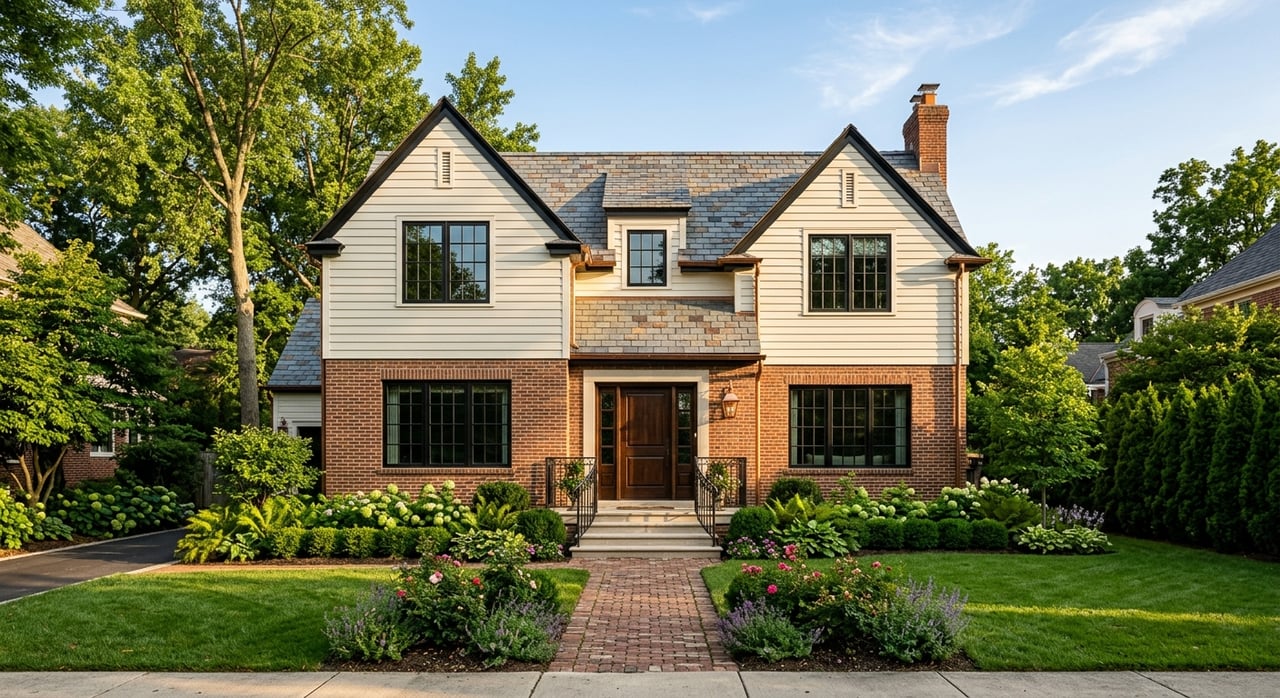
Cottage Farm and neighboring Longwood are described by the town as a cohesive suburban residential neighborhood projecting into Boston. Cottage Farm is especially known for single-family houses and a fairly unified streetscape that includes brick, stone, shingles, and stucco.
This area also stands out for green space. Hall’s Pond Sanctuary and Amory Woods are located in Cottage Farm, giving that pocket a rare combination of historic residential character and nearby conservation land.
Pill Hill, also called High Street Hill in town materials, is another classic older residential area. The town describes it as having a rich variety of design and architecture, making it one of Brookline’s more established, historic-feeling hills.
Harvard Avenue and Crowninshield offer another useful middle ground. Town preservation materials show Harvard Avenue developed alongside Brookline Village and includes a mix ranging from Greek Revival houses to later apartment blocks, while Crowninshield is described as an early-20th-century suburban-planning example with mostly detached single-family homes.
What daily life often feels like
Brookline’s daily-life pattern is shaped by a few clear nodes rather than one central downtown. The town’s commercial counts show the biggest concentrations of storefronts in Coolidge Corner and Brookline Village, with Washington Square as a smaller but still active center.
That helps explain why errands, dining, and casual coffee stops tend to cluster in a handful of walkable places instead of being spread evenly across town. If you are new to Brookline, learning those nodes first can make the town feel much easier to navigate.
The town’s late-night dining district policy also generally identifies Brookline Village, Commonwealth Avenue, Coolidge Corner, and Washington Square as the main activity zones. In everyday terms, those are the places where you are more likely to notice a stronger commercial rhythm.
Getting around Brookline
Brookline’s transit system is anchored by the Green Line and a few key bus routes. The town says the C line runs along Beacon Street from St. Mary’s to Coolidge Corner to Cleveland Circle, while the D line runs from Longwood Medical Area to Brookline Village to Reservoir Station in Cleveland Circle.
Brookline is also served by the 51, 60, 65, and 66 buses. Bluebikes stations are located in Brookline Village, Coolidge Corner, JFK Crossing, and Washington Square.
For many buyers and renters, this creates a practical difference between areas. Central and northern Brookline generally line up more naturally with transit-first living, while Chestnut Hill tends to lean more toward driving because its main corridor is Route 9 and rail access is less direct.
Parks and open space
If green space matters to you, Brookline has a few major names worth learning early. Larz Anderson Park is the town’s largest park at more than 65 acres and includes a carriage road and the Larz Anderson Auto Museum.
Brookline Reservoir Park is another easy landmark to understand. It is a 32-acre park around a man-made body of water that is about one mile in circumference, which makes it a familiar everyday recreation spot for many residents.
Hall’s Pond Sanctuary and Amory Woods are especially notable in North Brookline. The town says this area includes one of only two natural ponds remaining in Brookline and the only land in North Brookline set aside for conservation.
The town’s 2020 parks master plan also noted that neighborhood parks are concentrated mostly in the northern half of Brookline. If access to smaller nearby parks is part of your checklist, that is a useful point to keep in mind as you compare areas.
One detail buyers and sellers should not miss
Some Brookline neighborhoods include formal local historic district protections. Town preservation materials show that areas such as Cottage Farm, Pill Hill, and Harvard Avenue have historic-district designations, and certain exterior changes may require town review.
That does not make these areas less appealing. It simply means renovation plans, exterior updates, and listing preparation may need a closer look earlier in the process.
If you are buying, that is worth understanding before you make plans for changes. If you are selling, it can also shape how you think about updates, timing, and presentation.
A simple way to narrow your search
If you want the easiest mix of transit and errands, start with Brookline Village and Coolidge Corner. They are the clearest examples of Brookline’s everyday convenience hubs.
If you want a smaller center with a neighborhood-square feel, Washington Square is one of the best plain-language examples. It gives you commercial activity without the same scale as the larger districts.
If you want older residential character near the core, look more closely at Cottage Farm, Longwood, Pill Hill, Harvard Avenue, and Crowninshield. These areas help explain why Brookline can feel historic and residential even when you are still close to key destinations.
If you want a more roadway-centered, edge-of-town setting, Chestnut Hill is the main area to understand. It operates differently from Brookline’s village-style centers.
Brookline becomes much easier to read once you stop looking for one single “best” neighborhood and start matching areas to the way you actually want to live. If you are thinking about a move and want help translating Brookline into real-world options, Juliana Safar can help you narrow the search with clear, local guidance.
FAQs
What are the main Brookline neighborhoods newcomers should know?
- The most commonly used neighborhood names include Brookline Village, Coolidge Corner, Washington Square, Chestnut Hill, Longwood, Cottage Farm, Fisher Hill, Pill Hill, Harvard Avenue, North Brookline, and South Brookline.
Which Brookline area is best for errands and transit?
- Brookline Village and Coolidge Corner are the clearest places to start if you want a strong mix of storefronts, daily errands, and MBTA access.
What is Washington Square like in Brookline?
- Washington Square is a smaller commercial center with a neighborhood-square feel, a growing restaurant scene, and access to the C line and 65 bus.
How is Chestnut Hill different from central Brookline?
- Chestnut Hill is more edge-of-town and roadway-centered, shaped largely by the Route 9 and Boylston Street corridor rather than a compact village center.
Which Brookline neighborhoods feel more residential and historic?
- Cottage Farm, Longwood, Pill Hill, Harvard Avenue, and Crowninshield are useful areas to explore if you want older residential character near Brookline’s core.
Are there historic district rules in some Brookline neighborhoods?
- Yes. Some Brookline neighborhoods have local historic district protections, and certain exterior changes may require town review.